
When it comes to HVAC load calculations, there are two common approaches: Manual J Block Load and Manual J Room by Room Load. Each method serves a different purpose depending on the needs of the project.
First, let’s talk about the Manual J Block Load, also known as the Block View.
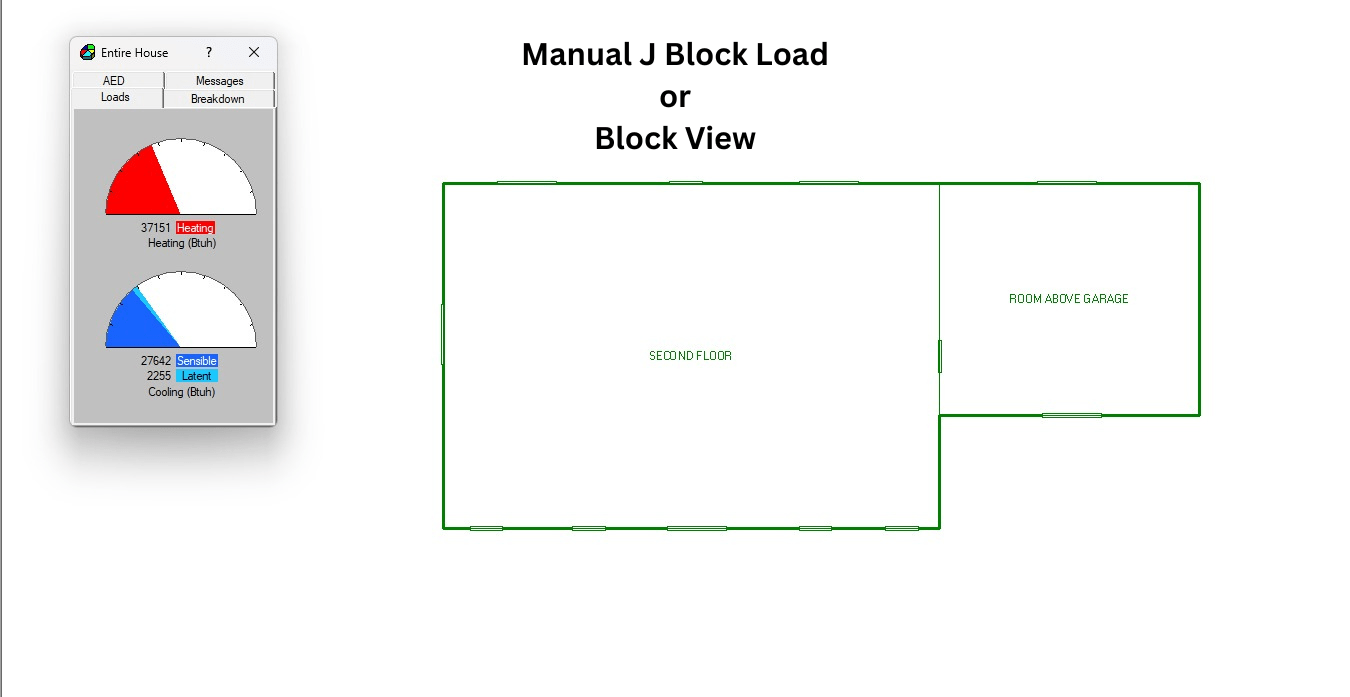
This method calculates the heating and cooling load for the entire floor or building as one combined space. It provides the total load required to size an HVAC system, which makes it suitable for completing a Manual S equipment selection.
Because it treats the entire structure as a single zone, it’s typically used when only one HVAC system is needed for the whole space.

Another advantage is cost efficiency. A Block Load calculation can offer up to 40% savings compared to a full room-by-room analysis, making it a practical option for simpler projects.
However, since it does not break down loads by individual rooms, it cannot properly support duct design with Manual D.
Now let’s look at the Manual J Room by Room Load.
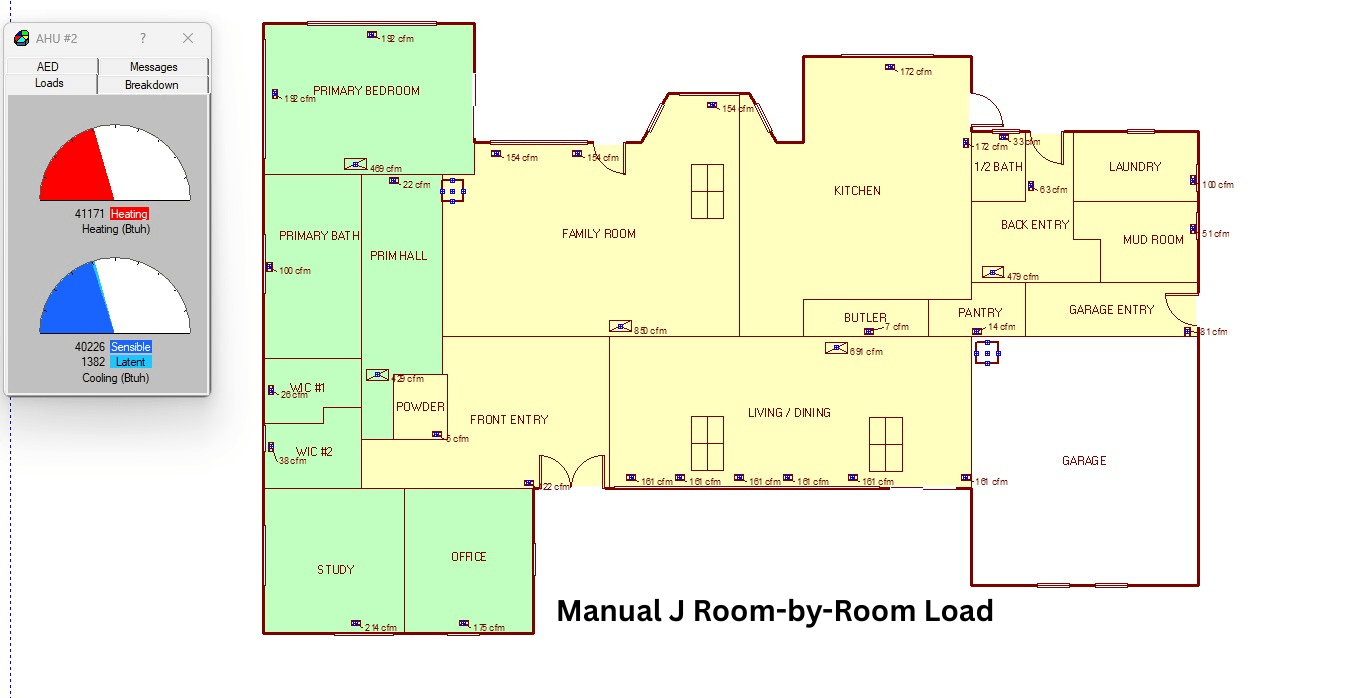
This method calculates the heating and cooling requirements for every individual room or space in the building.
By identifying the load for each area, it provides the detailed information needed to accurately size systems, design zoning setups, and create proper ductwork using Manual D.
This approach is especially important for homes or buildings with multiple zones, because it ensures each system or zone is properly sized for the spaces it serves.
In simple terms, Block Load calculations are faster and can save up to 40% when a single system is all you need, while Room by Room calculations provide the detailed data required for zoning and duct design.
Choosing the right method depends on the complexity of the project and the level of detail required for the HVAC design.
